Piano Tiles ™ - Tap Music Game
- 4.5
- Rating
- 500.00K
- Installs
- Free
- Price

 Analysis by App-foxy
I went into Piano Tiles ™ - Tap Music Game expecting a quick reflex game, and that is exactly where its appeal lies. The idea is simple: tap the dark piano tiles as they appear and avoid the white ones. There is no complicated setup, story, or long tutorial standing between you and the first attempt. Within moments, I was testing my timing, then restarting because one small mistake had ended a promising run.
That simplicity can be misleading. This is not a music-learning app, and it does not try to replace a rhythm game built around elaborate songs, characters, or long-term customization. It is a focused arcade experience in the music category, built around concentration, speed, and the satisfaction of beating your previous performance. Developed by Kooapps Games | Fun Arcade and Casual Action Games, it is free to start and carries an Everyone age rating, so it is easy to recommend for short sessions with family or friends.
After spending time with it, my view is positive but specific: this works best when you want a fast mental reset rather than a deep game to live in for weeks. The strongest part is the immediate challenge. The weaker side is that the basic loop can feel repetitive if you need substantial unlocks, a broad music library, or a strong sense of adventure. Whether that matters depends on what you want from a mobile game.
You May Also Like

 Pandora - Music & Podcasts
Pandora’s Music Is Easy to Start, but Harder to Recover
Pandora’s strength is its low-effort path from a seed to a station. Its weak spot is how much confidence it asks you to place in connection, setup, and quiet recovery.

 AccuWeather: Weather Radar
AccuWeather Review: A Quick, Clear Forecast for Everyday Decisions
For everyday plans, the best forecast is the one you can understand quickly. AccuWeather makes rain timing, radar, and local conditions easy to act on, with a few trade-offs.

 Hill Climb Racing
Why Hill Climb Racing Still Turns Crashes Into One More Run
A tiny car, a bumpy hill and one more upgrade: Hill Climb Racing keeps resurfacing because its simple chaos makes every near-miss feel personal.

 AliExpress - Shopping App
AliExpress Makes Global Shopping Feel Personal, but Shoppers Bear the Risk
AliExpress turns a global marketplace into a pocket-sized discovery engine. Its reach is useful, its shopping loop compelling, and its trade-offs easy to miss.

 Lords Mobile: Kingdom Wars
Lords Mobile Is a Kingdom-Building Routine, Not a Quick Match
A case-by-case verdict on the building, battles, device demands, and social commitments that make Lords Mobile rewarding for some players and exhausting for others.

 PDF Scanner app - TapScanner
TapScanner Makes Paperwork Easier to Capture, Check, and Share
TapScanner makes scanning with a phone feel less like a rescue operation and more like a dependable step in getting work done. Its capture tools are useful, though not flawless.
More From Our News Desk
View All News


Why the first few attempts feel so inviting
The opening experience is especially effective because the goal is obvious before the first round begins. Dark tiles move into position, white space becomes dangerous, and every tap has an immediate consequence. I did not need to read instructions carefully or learn a set of controls. That makes the game approachable for someone who rarely plays mobile games, while still giving experienced players a familiar reflex test.
The early goal is not an elaborate mission chain. It is simply to survive longer, tap more accurately, and understand how quickly the pattern can demand attention. That small objective is enough to create a useful rhythm: try, fail, notice what went wrong, and try again. I found myself making tiny adjustments to where I held the phone and how I placed my thumb, which mattered more than I expected once the pace increased.
This immediate feedback also makes the game suitable for awkward gaps in the day. I could play while waiting for an appointment, take a few attempts during a coffee break, or hand the phone to someone who wanted to see what the game was about. A round does not require a large commitment, and the restart mentality is less intimidating than in games where failure means losing several minutes of progress.
For younger players, the Everyone rating and straightforward controls make the concept easy to understand. Still, I would not assume that simple controls mean effortless play. The game asks for steady visual attention, and a child or casual player may enjoy the first rounds without necessarily enjoying the pressure that follows. The best introduction is to treat it as a friendly reaction challenge rather than as a conventional piano lesson.
Small goals matter more than a large destination
One of the interesting design choices here is how much motivation comes from personal targets. I naturally began setting modest goals: get past the point where I usually make a mistake, keep my eyes centered, or finish a run without panicking when the tiles arrive faster. Those goals are not dramatic, but they are concrete enough to make another attempt feel worthwhile.
This is where the game differs from many music games that depend on collecting songs, dressing characters, or following a narrative. The reward is largely in improved execution. If you enjoy seeing your own reaction time sharpen, that can be satisfying. If you need a visible collection or a clear sequence of levels to feel progress, the experience may seem thin.
I also noticed that the best way to play is not always to chase a high score immediately. During early attempts, I focused on accuracy and relaxed tapping rather than speed. That approach helped me recognize the visual rhythm of the tiles. Once that became comfortable, faster play felt less like guessing and more like responding. It is a useful habit for anyone who finds themselves losing because they rush before their eyes have adjusted.
How progress feels when the game gives you little room to relax
The progress signal is mostly performance itself. A successful run feels different from a weak one because your hands and attention stay synchronized for longer. That makes each improvement personal and easy to understand, even without a complicated progression screen. I could tell when I was improving because I was making fewer careless taps and recovering more calmly from a difficult sequence.
That kind of progress has a trade-off. It is meaningful to players who enjoy mastery, but it can be easy to overlook if you prefer explicit rewards. The experience does not have the same sense of accumulation as a role-playing game where every session adds equipment, abilities, or story. Here, the main thing you carry into the next attempt is better timing and a clearer understanding of your own mistakes.
A practical way to make that progress visible is to use short practice goals instead of playing mindlessly. I recommend choosing one focus for several attempts: keeping the thumb near the center, avoiding frantic double taps, or maintaining a consistent tempo. This turns a string of failures into useful feedback. It also prevents the common mistake of blaming the game when the real problem is an increasingly tense grip.
Phone position makes a surprising difference. Holding the device too low can force the thumb to travel farther than necessary, while gripping it tightly can make quick taps stiff. I had better results when the phone was stable and my tapping finger stayed light. This is not a hidden upgrade or a special setting; it is simply a practical adjustment that helps the game’s precise input feel fairer.
The difficulty curve rewards calm hands
The challenge begins gently enough to teach the basic visual rule, but the pressure grows as the tiles demand faster decisions. The important difficulty shift is not just speed. It is the shrinking time available to correct an uncertain choice. A player can understand the rule perfectly and still fail because attention drifts for a moment.
I liked that this creates a clear distinction between knowing what to do and actually doing it under pressure. Early play is about recognition. Later play is about maintaining a steady mental tempo. When I concentrated too hard on each individual tile, my movements became jerky. When I watched the flow more naturally, I performed better. That is the kind of subtle learning that keeps a very simple game from feeling completely empty.
At the same time, the rising intensity will not suit everyone. Players looking for a relaxed musical toy may find the later moments stressful rather than soothing. The piano presentation suggests calmness, but the actual activity is closer to a reflex drill. I would choose it for alertness and quick competition, not for winding down before sleep.
Another useful approach is to stop after a poor run instead of immediately forcing ten more attempts. Repeated failure can make you tap faster and less accurately, creating a cycle where frustration becomes the real obstacle. A brief pause often helps more than stubborn repetition. When I returned with relaxed attention, the same patterns felt more manageable.
What keeps a short game interesting, and where retention pressure appears
The main reason to return is the desire to do better. That is a clean form of retention because it comes from the player rather than from a large collection of chores. I did not need to remember a complicated objective. I simply wanted one stronger run. For people who enjoy score chasing and quick competitive challenges, that can be enough to support regular play.
There is also a social use case even when the game is played alone. Passing the phone to a friend creates an instant challenge because everyone understands the rule immediately. A group can compare attempts without explaining a control scheme or waiting through a long tutorial. It is particularly effective as a casual party distraction, although players who want a formal multiplayer mode should look elsewhere rather than expecting this simple loop to provide one.
The retention pressure becomes more noticeable when personal improvement slows. At first, each session can produce an obvious lesson. Later, progress may come in smaller steps, and the repeated pattern of starting over may feel familiar. That is the point where the game either becomes a satisfying reflex routine or loses its grip. I think its long-term appeal depends heavily on whether you enjoy chasing tiny gains.
Free access lowers the barrier to trying it, but in-app purchases range from $0.99 to $4.99 per item. I would approach those purchases carefully and decide first whether the core tapping loop is enough for me. A purchase should not be the reason to stay; the game needs to be enjoyable before spending anything. For a short-session arcade title, that is an important distinction because the basic challenge is what determines its value.
The current version is 1.0.34, and the game requires Android 6.0 or later. That makes checking device compatibility worthwhile before planning to play on an older phone. On a supported device, the experience is most comfortable when the screen responds reliably and the display is easy to watch. Since timing is central, any issue with touch accuracy or a cluttered screen can feel more significant here than in a slower game.
Who will enjoy the loop most?
I would recommend this to someone who likes compact arcade sessions, rhythm-based tapping, and games where improvement comes from practice rather than from collecting items. It is also a good choice for introducing a non-player to mobile gaming because the central rule is instantly understandable. The free entry point makes experimentation easy, and the Everyone rating keeps the concept broadly accessible.
I would be more cautious about recommending it to someone searching for genuine piano practice. Tapping tiles may build attention and coordination, but it does not teach notes, hand position, reading music, or musical technique in the way a dedicated learning app would. The music theme is part of the presentation and mood; the actual skill is visual reaction and timing.
Players who prefer story campaigns, strategic decisions, exploration, or deep customization may also run out of reasons to continue. This is not a criticism of the core design so much as a boundary around it. The game is intentionally narrow. Its strength is that it starts quickly and stays focused, while its weakness is that it offers fewer kinds of engagement than a larger rhythm or arcade package.
How it compares with familiar alternatives
Compared with a traditional piano-learning app, this title is much easier to pick up but far less educational. I can open it for a burst of concentration without preparing a lesson, yet nothing in the basic interaction should be mistaken for practicing an instrument. If the goal is musical knowledge, an instructional app is the better tool. If the goal is a fast test of eyes and fingers, this game is more immediately entertaining.
Compared with large rhythm games, it is less demanding in terms of setup and content. Many rhythm games build their identity around song selection, visual effects, characters, or progression systems. This one has a cleaner arcade focus. That makes it convenient when I want to play immediately, but it also means there is less variety to soften repetition. Someone who plays mainly for favorite tracks may prefer a broader alternative.
Compared with endless runners, the challenge is more stationary and deliberate. I am not steering through a world or reacting to obstacles from different directions; I am reading a narrow stream of decisions. That can feel more precise and less chaotic, especially for short sessions. On the other hand, players who need movement, exploration, or changing environments may find the tile lane too limited.
Its strongest comparison point is convenience. The concept does not ask me to learn a complex system before I can test myself. Its weakest comparison point is depth. Once the novelty of the tapping rule has settled, the game relies on the player’s interest in personal mastery. That is a fair exchange, but it should be understood before downloading.
A realistic everyday session
Imagine having ten minutes before leaving for work. You open the game expecting one attempt, make a mistake quickly, and immediately notice that your thumb was too tense. The next run lasts longer because you focus on the center of the screen instead of staring at a single tile. A third attempt goes better, but you stop before frustration takes over. That is a realistic success case: the game gives you a compact concentration exercise without demanding a full evening.
There is a different scenario where it may disappoint. Suppose you want to relax on a long trip with a changing soundtrack, unlockable content, and a sense that every session advances a larger journey. After the initial challenge, the focused tapping may not provide enough variety. In that situation, a fuller rhythm game or an offline puzzle with multiple mechanics would probably serve you better.
My progression verdict
The game sustains play through personal mastery, not through a large progression system. That is both its clearest identity and its biggest limitation. The early goals are immediate, the progress signals come from cleaner and longer runs, and the difficulty curve turns a simple rule into a genuine test of concentration. The pacing works when I want repeated attempts with quick feedback.
It is less convincing as a long-term destination for players who need frequent unlocks, narrative milestones, or a wide range of activities. The retention loop can become repetitive once improvement slows, and the music theme should not be confused with music education. I also think the purchase options make more sense only after the free experience has proved that the tapping challenge fits your habits.
With an average rating of 4.4 from around 1.5 thousand ratings and more than 500 thousand installs, it has clearly found an audience for this compact style of play. Those figures do not change my core judgment, but they fit the experience I had: this is an accessible, recognizable arcade idea that works best when kept simple.
Piano Tiles ™ - Tap Music Game is worth trying if you want a free, fast music-themed reflex game that can fill a few spare minutes and give you a clear personal target. I would recommend it to casual players, families, and anyone who enjoys chasing better timing. I would skip it in favor of a richer rhythm game or a real piano-learning tool if variety, instruction, or long-term progression matters more than immediate tapping challenge.
FAQs for Piano Tiles ™ - Tap Music Game
01What is Piano Tiles ™ - Tap Music Game?
Piano Tiles ™ - Tap Music Game is a fast-paced mobile game where players tap on black tiles as they appear on the screen while avoiding white ones. This rhythm-based game offers an engaging experience as users tap along to various music tracks, enhancing both speed and coordination.
02How does the scoring system work in Piano Tiles?
In Piano Tiles, the scoring system is based on how accurately and quickly you tap the black tiles. Combo streaks increase your score significantly, and missing a tile or tapping a white tile will end your streak. The game rewards precision and speed, encouraging players to improve their timing.
03Are there different modes available in Piano Tiles ™?
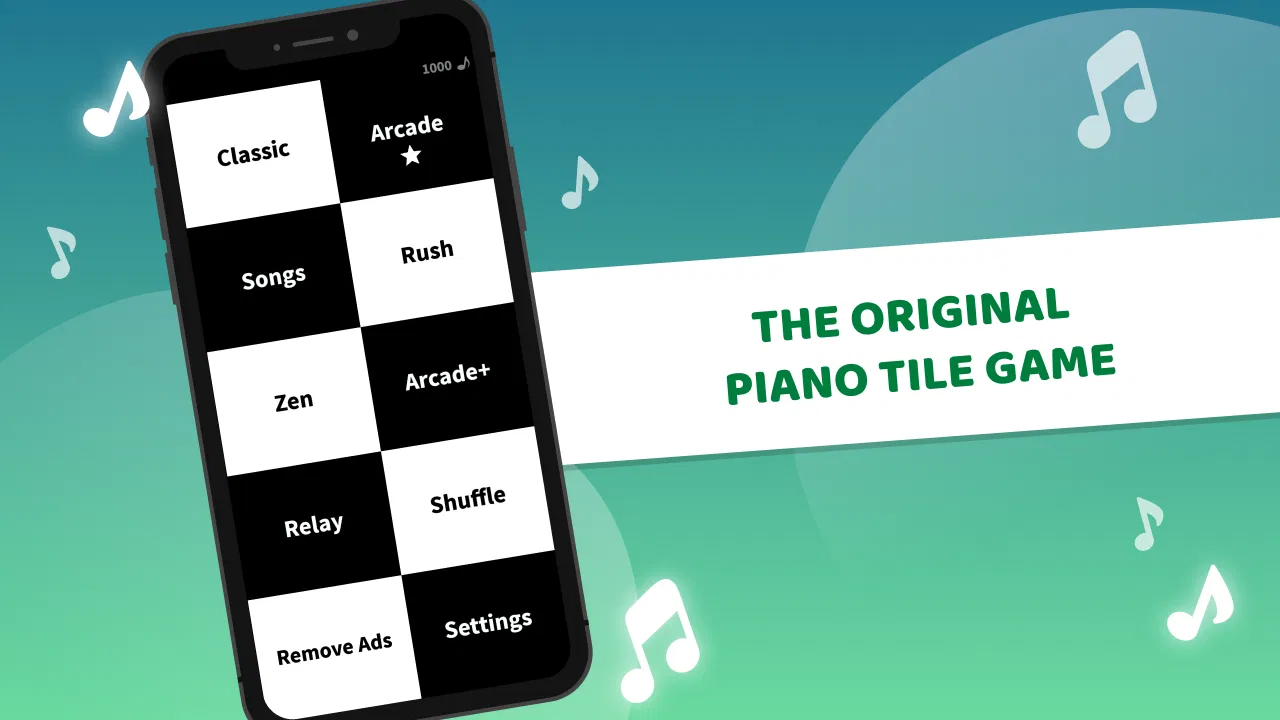
Yes, Piano Tiles offers multiple modes to keep players engaged. These include Classic, Arcade, Zen, and Rush modes, each providing a unique challenge. Classic mode focuses on speed, Arcade tests endurance, Zen is all about relaxation, and Rush challenges you to achieve high speeds without mistakes.
04Is Piano Tiles ™ free to play?
Piano Tiles ™ is free to download and play, but it includes in-app purchases and ads. Players can buy additional songs and features, or remove ads for a smoother experience. While the game is enjoyable without purchases, these options enhance gameplay for those who wish to invest.
05What are some tips for improving performance in Piano Tiles?
To improve in Piano Tiles, practice is key. Familiarize yourself with the rhythm of each song and focus on maintaining a steady tempo. Use headphones for better audio cues, and start with slower songs to build your speed and accuracy. Consistent practice will lead to better reflexes and higher scores.
Pros
- Simple
- intuitive controls make it easy to play.
- Features a wide variety of popular songs.
- Offline mode available for playing without internet.
- Regular updates with new songs and challenges.
- Visually appealing with smooth animations.
Cons
- Contains frequent ads that can interrupt gameplay.
- In-app purchases can be expensive to unlock features.
- Limited song selection without purchasing packs.
- Can become repetitive after extended play.
- Requires precise timing
- which can be frustrating.

Piano Tiles ™ - Tap Music Game
Gallery